
The chicco keyfit cleartex infant car seat is worth considering if you want a rear-facing infant carrier with a separate car base and fabric made without added chemicals in the materials designated as ClearTex. The important detail is that ClearTex describes a fabric designation, not one single seat: KeyFit 30 ClearTex and KeyFit 35 ClearTex are different models. Check the exact model’s limits, fit, and price before choosing. You do not need to solve every baby-gear question tonight.
For a quick comparison, look at the Chicco KeyFit 30 ClearTex if you want to consider a KeyFit option alongside the KeyFit 35 ClearTex, which may appeal to families who want a higher stated weight limit. Graco’s SnugRide line is another place to look if you are comparing compatible travel systems. Limits, features, and stroller compatibility vary by specific model, so compare the labels rather than assuming every seat in a line works the same way.
What the chicco keyfit cleartex infant car seat offers
An infant car seat is designed for rear-facing travel and can be removed from its base to carry your baby between the car and your destination. That can be helpful when you are navigating a parking lot with a diaper bag, a toddler, and approximately three hands too few.
The base stays installed in the vehicle, while the carrier clicks in and out. You can also check your exact seat’s instructions for installation without the base, which can be useful for a taxi or occasional ride in another car. Practice that method before you need it, and bring the manual along. A removable carrier is convenient, but it is not the only safe choice: a properly installed convertible seat that fits a newborn can work from the beginning too.
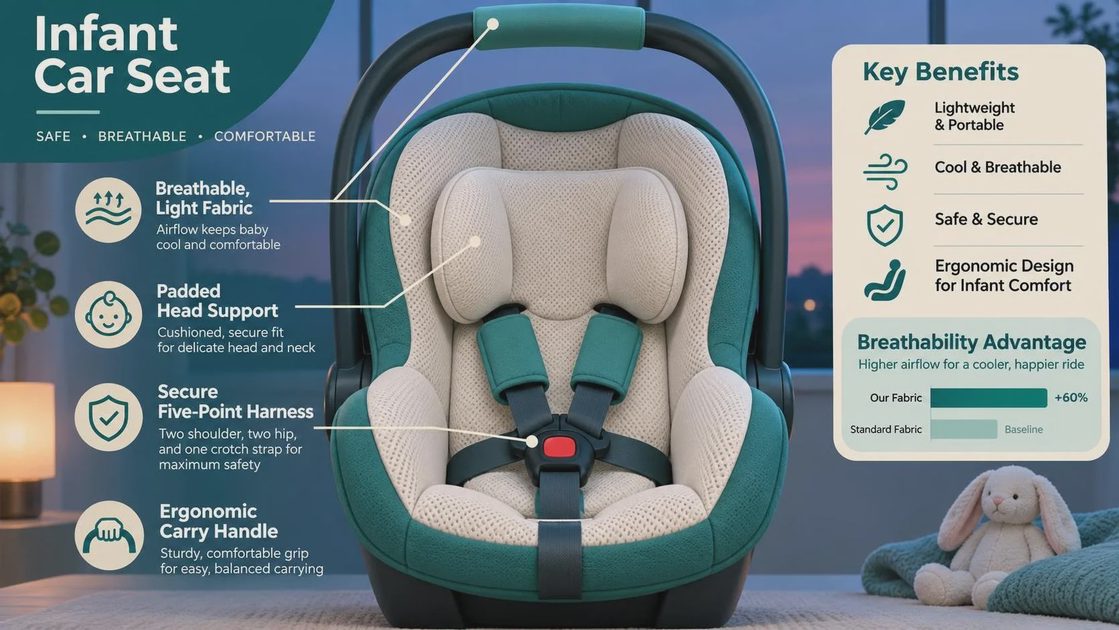
ClearTex is Chicco’s name for materials made without added chemicals. The label does not mean the whole seat is free of all chemicals, and it does not replace the need to follow the harness and installation instructions. If the fabric matters to you, read the product page for the specific model and its description of which materials carry the designation.
Choosing between KeyFit models
Start with the height and weight limits printed on the seat and in its manual. The KeyFit 30 and KeyFit 35 have different stated upper weight limits, but a baby may outgrow either seat by height or by another fit requirement before reaching the maximum weight. Do not choose based on the number in the name alone.
Newborn fit matters just as much as the upper limit. Check the minimum permitted weight and height, how the harness fits a small baby, and when any included newborn positioner must be removed. The manual for your exact model is the authority here; inserts that look similar are not necessarily interchangeable.
Then consider the carrying part honestly. An infant carrier gets heavier once a growing baby and a blanket or two are involved. If lifting it from a low car seat sounds miserable during postpartum recovery, plan to leave the carrier in the car sometimes and carry your baby separately. There is no rule that says you have to use the removable feature on every trip.
If you already own a stroller, check the stroller manufacturer’s compatibility list for the precise seat and adapter. A shared brand name or a listing that says “universal” is not enough to confirm a secure fit. Also compare the cost of an extra base if your baby will regularly ride in two cars; buying a second base can be convenient, but installing the seat correctly without one may be another option when the manual permits it.
Getting a secure installation
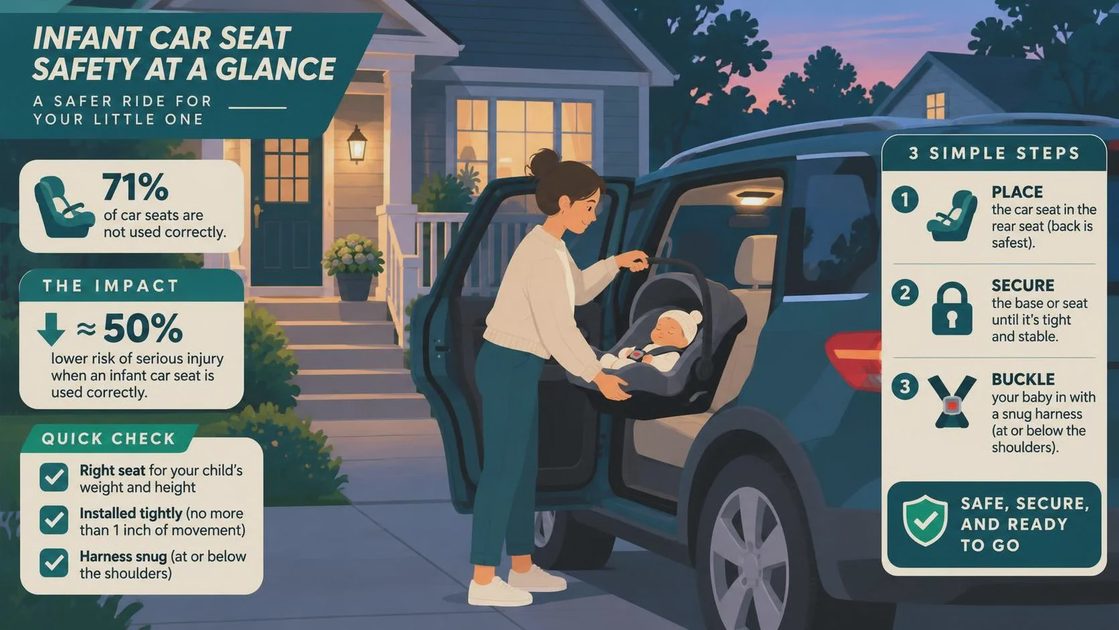
Choose a seating position allowed by both your vehicle and car-seat manuals. Never place a rear-facing seat in front of an active passenger air bag. The back seat is generally the right place for children, but the best available position is one where you can install the seat correctly and follow both manuals.
Install the base using either the vehicle seat belt or lower anchors as directed. Do not use both together unless both manufacturers allow it. Check the recline indicator with the vehicle parked on level ground, and follow the instructions for your baby’s size. At the belt path, the installed base should move less than one inch side to side and front to back when checked with a firm handshake.
Once the carrier is attached, confirm it is locked into the base according to the manual. Give it the instructed check before each trip. If you are unsure about the angle, belt path, or locking mechanism, a certified child passenger safety technician can help you work through it without judgment.
Harness fit, naps, and everyday care
For a rear-facing baby, place the harness straps at or below the shoulders, following the seat’s instructions. Buckle and snug the harness so you cannot pinch a fold of webbing at the shoulder, then position the chest clip at armpit level. Remove bulky coats before buckling; you can place a blanket over the secured harness for warmth.
Use only inserts, strap covers, and other accessories that came with the seat or are specifically approved for that model by its manufacturer. An aftermarket head support may look comforting, but it can interfere with the fit of the harness. If your newborn’s head position worries you, ask a certified technician or your baby’s clinician for help rather than adding padding.
Car seats are made for travel, not routine sleep outside the car. If your baby falls asleep on the drive, move them to a firm, flat sleep surface on their back when you reach your destination. Do not leave a baby unattended in the carrier, including when it is attached to a stroller or resting on the floor.
Spit-up happens. Before washing the cover, consult the instructions for your exact seat, including the separate directions for the harness and buckle. Avoid soaking straps or using cleaning products the manual does not permit. Harsh cleaning can damage parts that need to work properly in a crash.
Before you buy or accept a used seat
Check the manufacture date, expiration guidance, recall status, and whether all original parts and instructions are present. Register a new seat with the manufacturer so you can receive recall notices. If you are considering a used one, accept it only when you can verify its history, including whether it has been in a crash, and confirm that it has not expired or been recalled without the required remedy. Otherwise, pass it along to the appropriate recycling or disposal program rather than using it.
A good seat is one that fits your baby, fits your vehicle, and can be installed and used correctly every ride. Start with those basics, then let the fabric and stroller preferences help you choose between the options that meet them. This does not need to be pretty to work.



No notes yet — write the first one.