
The Chicco KeyFit 30 is a rear-facing infant car seat worth considering if you want a removable carrier for the newborn months and a base that stays in the car. Its stated child weight range is 4 to 30 pounds, but weight is only one part of the fit: height and the position of your baby's head matter too. It is a sensible choice for families who value a carry handle and an infant-seat setup, with the usual trade-off that a growing baby plus a carrier gets heavy.
You do not have to solve every car-seat question before the baby arrives. Start with whether an infant carrier fits your daily routine, then make sure the specific seat fits your vehicle and can be installed correctly.
What the seat is designed to do
The Chicco KeyFit 30 is used rear-facing, and the carrier can be removed from its installed base. That makes it possible to buckle your baby indoors and bring the carrier to the car. Depending on the specific stroller and any required adapter, the carrier may also attach to a compatible stroller.
The manufacturer's stated height limit is 30 inches, and the top of the child's head must be at least 1 inch below the top of the headrest. Check the labels and manual for your exact seat and stop using it when your child reaches any limit, even if they are still under 30 pounds. Many children outgrow an infant seat by height or head position before reaching its maximum weight.
This is not a seat your child will use through every stage. After outgrowing it, your child needs another appropriately fitted rear-facing seat, typically a convertible car seat. Rear-facing does not end just because a baby has outgrown an infant carrier.

Installation: Pick one method and check your work
You can install the Chicco KeyFit 30 base using the vehicle seat belt or the lower anchors, also known as LATCH, following the instructions for the seat and your car. Both are acceptable when used correctly. Do not use both at the same time unless the instructions for both the car seat and vehicle specifically allow it.
Place the base in an approved rear vehicle seating position. Use its recline indicator as directed, and tighten the chosen belt or lower-anchor strap. Then check for movement at the belt path, where the belt or strap passes through the base. The base should move less than 1 inch side to side and front to back at that point. Checking at the end farthest from the belt path can make a secure installation seem looser than it is.
The vehicle's manual matters here, especially for choosing a seating position and using lower anchors. The center is not automatically the right choice if your vehicle does not permit the installation method there or you cannot get a secure fit. A correctly installed seat in an approved outboard position is a better plan than an uncertain installation in the middle.
The carrier can also be installed without its base when you follow the seat's instructions. That can be useful in a taxi or another caregiver's car, but practice before you need to do it with a hungry baby waiting. Never place a rear-facing car seat in front of an active frontal air bag.
If you want another set of eyes, look for a certified child passenger safety technician. A hands-on check can help you learn the installation rather than leaving you dependent on someone else to repeat it.
Getting a newborn comfortably secured
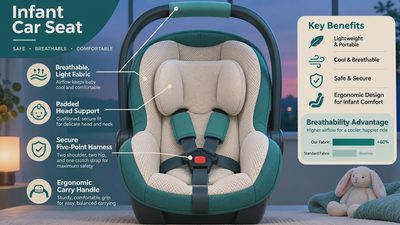
For a rear-facing baby, position the harness straps at or below the shoulders as the manual directs. Buckle the harness and snug it so you cannot pinch a horizontal fold of webbing at the shoulder. Place the chest clip at armpit level. The straps should lie flat rather than twist.
The Chicco KeyFit 30 includes newborn positioning components; follow the instructions for when and how to use or remove them. For a smaller or premature baby, ask the hospital team or your child's clinician about any additional guidance before discharge. Avoid adding head supports, strap covers, or padding that did not come with the seat or are not approved by the manufacturer for that exact model.
Bulky coats can leave the harness too loose. Buckle your baby in thin layers instead, then place a blanket over the secured harness if needed, keeping it away from the face. A snug harness may feel unfamiliar at first, but it should not be painfully tight.

Living with the carrier day to day
The convenience of the Chicco KeyFit 30 is clearest when a sleeping baby can move from the car to a compatible stroller without being unbuckled. The less glamorous part is carrying the seat through a parking lot while holding a diaper bag and perhaps another child's hand. Try lifting a display carrier with an appropriate weight inside, if the store permits it, and consider how far you actually need to carry it.
Check stroller compatibility for the exact stroller and car-seat versions before buying. Some combinations need an adapter, and a similar-looking model name is not a guarantee. If two cars regularly handle pickup, a second compatible base may make the handoff easier; another option is learning a correct baseless installation.
A car seat is for travel, not routine sleep at home. If your baby falls asleep in the car, move them to a firm, flat sleep surface on their back as soon as practical after the trip. You are not doing anything wrong when a baby falls asleep on a drive; the useful next step is moving them once you arrive.
Buying, cleaning, and knowing when to replace it
Before buying a Chicco KeyFit 30, check the manufacture date, expiration information, included parts, and current recall status. Register the seat with Chicco so the manufacturer can contact you about a safety recall. If you are considering a used seat, choose one only if you know its complete history, it has not expired or been recalled without a remedy, and all required parts and instructions are present.
After any crash, follow Chicco's instructions for whether the seat must be replaced; do not assume an undamaged-looking seat is safe to reuse. For cleaning, follow the manual for the cover, harness, and buckle. Harsh cleaners, soaking, or machine washing parts that are not approved for it can damage them.
My bottom line: this seat makes sense for families who want the flexibility of an infant carrier and are comfortable planning for a later transition to a convertible seat. Check the fit in your car, practice the install, and keep the manual where you can find it. You do not need a perfect system. You need one that works at 3 a.m.




No notes yet — write the first one.