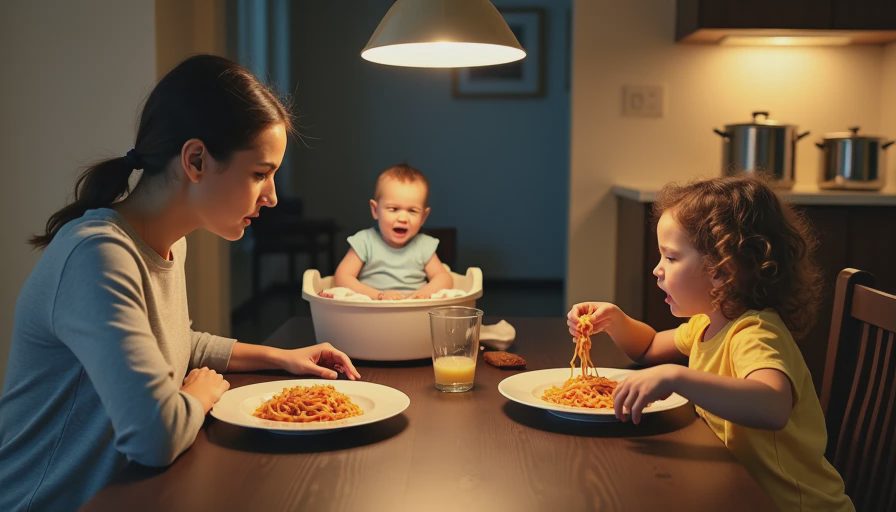
It's 5:47 p.m. You've somehow managed to get something resembling a meal on the table — pasta, maybe, with butter and a vegetable that you're hoping will be eaten. The baby is in the bouncy seat next to the table, wailing with the particular intensity of a newborn who has decided that this exact moment is the worst moment of their entire life. Your toddler is staring at the pasta like you've served them a bowl of live spiders.
"I don't LIKE this pasta," they announce, pushing the bowl away with theatrical force.
You take a breath. You try the calm voice. "It's the same pasta you liked yesterday."
"NO IT'S NOT!"
The baby cries harder. The toddler slides off their chair. You look at your own plate — already going cold — and realize you haven't eaten since 11 a.m., and it's not going to happen tonight either.
Welcome to dinner with two young children. It is, in my experience, the single hardest hour of the day for most families — harder than bedtime, harder than the morning rush, harder than the 3 a.m. feeds. And here's the thing nobody tells you: the dinner hour is hard because it asks everything of you at the exact moment your resources are at their lowest. You're tired. The baby's fussy. The toddler's blood sugar is crashing. The house is a wreck. And somehow, you're supposed to prepare and serve a meal that everyone will eat while staying calm and present.
I've walked into enough homes at 6 p.m. as a postpartum care specialist to know that this scene is nearly universal. I've also lived it with my own two children more times than I can count. Here's what I've learned about surviving it — and maybe, eventually, making it slightly less brutal.
Why Dinner Time Falls Apart So Predictably
The Witching Hour and the Dinner Hour Collide
In my post about newborn evenings, I talked about the witching hour — that stretch in the late afternoon and early evening when babies are fussier and harder to settle. Now add a toddler to that same stretch of time. Your toddler is tired from the day, hungry from the gap between lunch and now, and emotionally fragile because they've been holding it together since morning. Your newborn is overstimulated and cluster-feeding. Your partner may or may not be home yet. And you, the person holding all of this, have been running on fumes since the first feed of the day.
The collision of these factors is not a personal failure. It's physics. You are not failing at dinner; you're trying to cook a meal in the middle of a pressure system that's been building all day.
Toddlers Are Developmentally Wired for Food Battles
Here's something I want you to really absorb: pickiness and food refusal are developmentally normal toddler behavior, not a sign that you're a bad cook or a bad parent. Between ages one and three, children go through massive changes in their relationship with food. Their growth slows down, so their appetite drops. Their taste buds are still calibrating, so familiar foods can suddenly taste "wrong." And their drive for autonomy means that refusing food is one of the few ways they can assert control over their own lives.
When your toddler refuses pasta that they ate happily last week, they're not trying to drive you insane. They're saying: I am my own person, and I will prove it by not eating this thing I used to like. It's maddening, but it's normal.
The Baby Chooses This Exact Hour to Be Loud
Newborns have an uncanny ability to escalate their crying right when you sit down to eat. Part of this is biology — the evening fussy period is real. Part of it is that you're now stationary, and a stationary parent is a parent who should be holding the baby. And part of it is that babies can sense when food is getting cold; it's like a sixth sense they're born with.
Whatever the reason, the result is the same: you're trying to feed yourself, soothe a baby, and persuade a toddler to eat, all at once, with no hands free and no break in sight.
What Actually Helps: Before Dinner
Shift Your Expectations for What Dinner Needs to Be
The biggest source of dinner-hour suffering is not the crying or the refusal — it's the gap between what you think dinner should look like and what it actually looks like. If your mental image of dinner is a peaceful family meal where everyone eats the same food and chats about their day, you're setting yourself up for pain.
What if dinner just meant: everyone gets some calories in their body, and nobody gets hurt, and we all survive until bedtime? That's a dinner worth celebrating. Some nights, dinner will look like a toddler eating crackers and cheese on the couch while you bounce a baby with one hand and eat a granola bar with the other. That's not a failure. That's feeding your family.
Feed Your Toddler Early
This sounds counterintuitive, but it's one of the most effective changes I've ever recommended: feed your toddler before the witching hour hits. Most toddlers do their best eating when they're not yet exhausted and overstimulated — somewhere between 4:30 and 5:30 p.m., depending on your family's rhythm.
This might look like serving your toddler a "snack plate" dinner early — cheese cubes, crackers, fruit, cut-up vegetables, maybe some leftover pasta — while the baby naps or is calm. Then, when the adults eat later, your toddler can join the table for a small second helping or just some fruit, without the pressure of having to eat a full meal at the worst hour of their day.
I did this with my daughter when my son was tiny, and it transformed our evenings. She ate well at 5 p.m., then sat with us at 7 p.m. with a small bowl of fruit or a cup of milk, happy and full. Dinner stopped being a battle because the battle wasn't happening anymore.
Prep the Baby's Setup in Advance
Before you even think about dinner, get the baby's station ready. If you have a bouncer, a swing, or a floor mat, set it up near the table. Have a pacifier within reach. If you're wearing the baby during dinner, put the carrier on before the food is ready so you're not wrestling with straps while the pasta goes cold.
One trick that works for many families: if the baby is calm, start dinner prep while they're in the carrier or the bouncer. If the baby is fussy, wait until the absolute last minute to put them down. The goal is to hit the dinner hour with as few active demands as possible.
What Actually Helps: During Dinner
Stop Short-Order Cooking
I know it's tempting. Your toddler refuses the pasta, so you offer chicken nuggets. They refuse the nuggets, so you offer a bagel. Before you know it, you've prepared three separate meals and your toddler has eaten exactly three bites total. This is short-order cooking, and it's a trap.
The problem is that short-order cooking teaches your toddler two things: first, that refusing food leads to better options; and second, that the food you made wasn't good enough. It also exhausts you, which makes everything else harder.
Instead, try this approach: offer one meal, with at least one "safe food" on the plate. A safe food is something your toddler reliably eats — crackers, cheese, fruit, bread, yogurt. The rest of the plate can be whatever the family is eating. If your toddler refuses the pasta but eats the cheese and crackers, that's okay. They got some calories. They'll try the pasta another day, or they won't. The goal is exposure, not consumption.
The rule I use: you don't have to eat it, but this is what's for dinner. No bribes, no punishment, no alternative meals. Just calm, consistent boundaries. It takes time, but it works. And it saves your sanity.
Let the Baby Cry for a Few Minutes
This is hard to write, because I know how viscerally painful a crying baby is. But here's the truth: a newborn can cry for three minutes while you eat. I'm not saying leave them to cry for an hour. I'm saying that if the baby is in a safe place, fed, dry, and not in pain, three to five minutes of crying while you eat a few bites of dinner will not harm them.
I used to tell my clients: "The baby won't remember that they cried for five minutes while you ate. But you will remember not eating." If you're on the edge of collapse because you haven't eaten all day, feeding yourself is not selfish. It's necessary. And a parent with food in their body is a better parent than one running on empty.
Try this: put the baby in a safe spot, sit down at the table, and set a timer for five minutes. Eat as much as you can in that window. When the timer goes off, pick up the baby. You won't get a full meal, but you'll get enough to keep going, and that matters.
Involve Your Toddler in the Meal
One of the most effective ways to reduce dinner battles is to give your toddler some ownership over the meal. This doesn't mean letting them plan the menu — it means involving them in small, age-appropriate ways.
Before dinner: Let them choose between two options: "Should we have pasta or rice tonight?" or "Do you want carrots or green beans with dinner?" Giving them a choice makes them feel invested in the meal.
During dinner: Let them serve themselves from a shared bowl (with help). Let them use a special spoon or a special plate. Let them dip their pasta in sauce or cheese. Toddlers are more likely to eat food they've had some control over.
After dinner: Let them help clear their own plate or wipe their spot at the table. This signals that dinner is a family event, not a hostage negotiation.
Have a "Done" Bowl
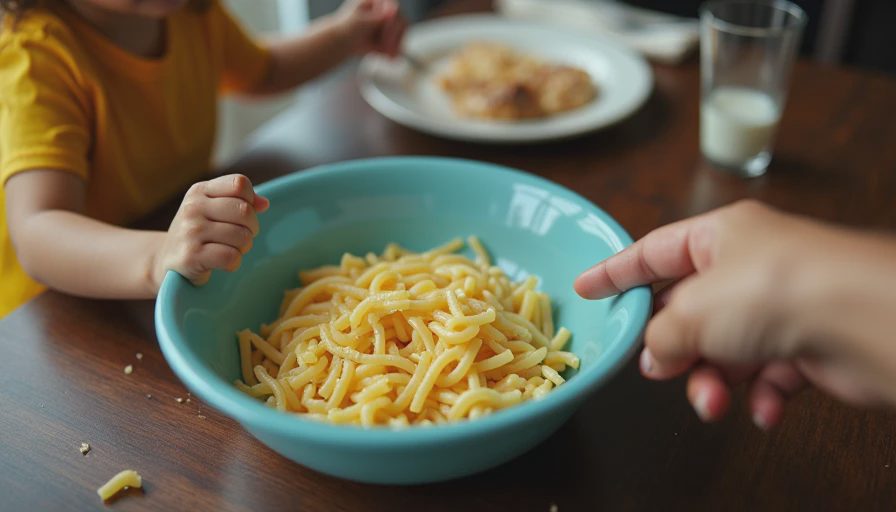
Here's a small trick that works surprisingly well with toddlers: put a small bowl on the table and tell your toddler that when they're done with something on their plate, they can put it in the "done bowl" instead of throwing it on the floor. This gives them a safe, appropriate way to reject food that doesn't involve a mess or a meltdown.
I've seen this work with children as young as eighteen months. The toddler takes the offensive pasta, puts it in the done bowl with great ceremony, and then eats their cheese. It's a win for everyone.
The After-Dinner Reset
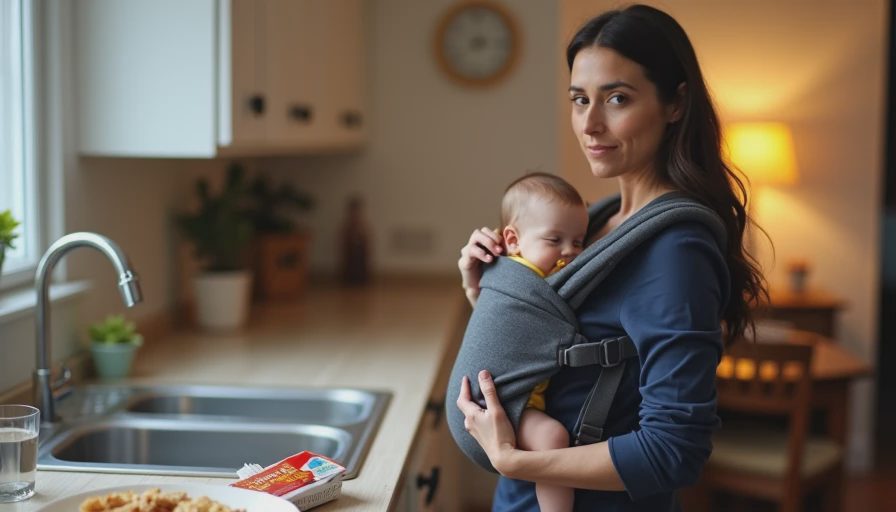
When dinner is finally over — however it went — take a minute to reset before diving into bedtime. Clear the table if you can, but don't obsess. Put the leftover food away. Fill your water glass. Take three deep breaths. The dinner hour is done. You survived it. Whatever happened is over.
One habit I've developed: I don't rehash dinner in my head after it's over. I don't replay the tantrum or the food refusal or the moment I snapped. I just move forward. The dinner hour is a snapshot, not a summary of my parenting. The same is true for you.
When Dinner Is Actually Impossible
Some nights, no strategy works. The baby screams the entire time. The toddler throws everything on the floor. You don't eat. The pasta ends up in the done bowl, on the floor, and somehow in the baby's hair. On those nights, you don't need a strategy. You need permission to lower the bar.
Order pizza. Serve cereal. Feed the toddler crackers in the bath. Eat a peanut butter sandwich over the sink while the baby finally falls asleep on your shoulder. This is not giving up. This is adapting. The goal of dinner is feeding people. If people got fed — even in a weird way — dinner happened.
I remember one evening when my daughter was two and my son was about a month old. My husband was working late, the baby wouldn't stop crying, and my daughter had refused three different dinner options. I finally sat on the kitchen floor with my back against the cabinet, baby on one knee, and ate a cold piece of pizza from the box while my daughter sat next to me eating goldfish crackers and watching me like I was the most interesting thing in the world.
That was dinner. It wasn't pretty. It wasn't balanced. But it was food, and we ate it together, and nobody got hurt. That's a win.
The Bigger Picture
The dinner hour will not always be this hard. I promise. The newborn will grow out of the evening fussies. The toddler will expand their food repertoire. You will eventually eat a warm meal at a table with both hands free. This season is brutal, but it's not permanent.
In the meantime, remember what I always say: you do not need a perfect system. You need one that works at 3 a.m. And at 6 p.m. And at every dinner hour in between. That system might look like early toddler dinner, a done bowl, and five minutes of sitting down while the baby fusses. It might look like cold pizza on the kitchen floor.
Whatever it looks like, it's enough. You're enough. Now go eat something.


No notes yet — write the first one.