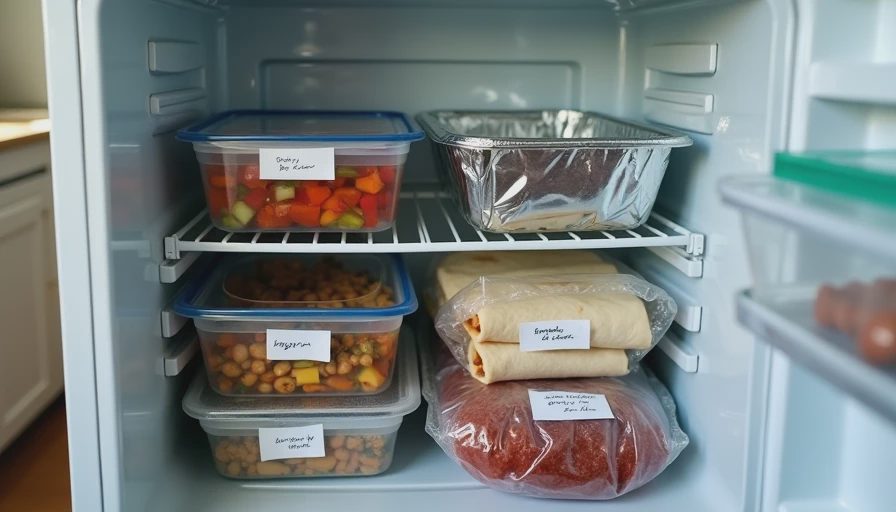
The first time I made freezer meals, I followed a plan I found online. It involved fourteen recipes, three grocery store trips, and an entire Saturday of cooking. I chopped vegetables for four hours, dirtied every pot I owned, and filled my freezer with neatly labeled containers. I felt like a domestic goddess. Then I actually ate the meals, and most of them tasted like damp cardboard with salt.
That was my introduction to the freezer meal trap: spending a full day cooking food you don't even want to eat. When you're exhausted and hungry, a freezer meal that tastes bad is worse than no freezer meal at all, because it adds disappointment to your hunger.
After that failed experiment, I spent years figuring out what actually works — both for the families I supported as a postpartum care specialist and for my own kitchen. The result is a freezer cooking approach that doesn't require a full weekend, doesn't require you to be a great cook, and produces food that still tastes like food when you're running on no sleep.
Why Most Freezer Meal Plans Fail
They're Too Ambitious
The classic freezer meal plan tells you to cook twenty meals in one day. That's too much. By hour three, you're exhausted and resentful. By hour five, you're just dumping things into bags and hoping for the best. The food suffers, and so do you. A tired parent doesn't need twenty meals. They need five or six meals that they can actually execute without collapsing.
They Assume You Have a Full Day
Who has a full day to cook when you're pregnant, postpartum, or chasing a toddler? Most of us have two-hour windows, maybe three, and those windows are usually interrupted by someone needing a snack, a diaper change, or a hug. A freezer cooking plan that requires six uninterrupted hours is a plan that will never happen.
They Prioritize Quantity Over Taste
Many freezer meal plans optimize for efficiency: one pot, one bag, one flavor profile. The result is meals that all taste the same — bland, mushy, and gray. When you're sleep-deprived, taste matters more than usual, because food is one of the few comforts you have. If your freezer is full of meals you dread eating, you'll order takeout instead, and the freezer meals will sit there for six months until you throw them out.
The Freezer Meal Approach That Actually Works
I've learned to stop trying to fill my freezer in one day. Instead, I build a small stash of meals I genuinely want to eat, using a method that works with a tired brain and a chaotic schedule. Here's what that looks like.
Cook Once, Freeze Half
The easiest freezer meal you'll ever make is the one you're already making for dinner. When you cook a meal your family likes — soup, chili, casserole, pasta sauce, curry — double the recipe. Eat half tonight, freeze the other half. No extra cooking day, no extra pots, no marathon session. Just a slightly bigger pot and a few extra containers.
This method works because it builds your freezer gradually without asking anything extra from you. Over a few weeks, you'll have a small stash of meals you already know you like, because you ate the first half and it was good.
Choose Foods That Freeze Well (and Taste Good After)
Not everything freezes well. Here's what I've learned to focus on:
Soups and stews. These freeze beautifully and often taste better after the flavors have had time to meld. Lentil soup, chicken vegetable soup, beef stew, chili — all excellent candidates.
Sauces and braises. A tomato-based pasta sauce, a slow-cooked beef ragu, a coconut curry sauce. Freeze the sauce separately from the pasta or rice, so nothing gets mushy.
Casseroles and bakes. Lasagna, enchiladas, baked ziti, shepherd's pie. These reheat well and feel like a real meal, not a sad freezer compromise.
Marinated proteins. Raw chicken or beef in a marinade, frozen flat in a bag. Thaw overnight, then cook fresh. The marinade does the work, and the meat tastes like it was just prepped.
Breakfast items. Muffins, breakfast burritos, baked oatmeal. These are gold when you're holding a baby at 7 a.m. and need something with one hand.
Freeze in Portions That Make Sense
A whole casserole is great if you're feeding a family of four. But if it's just you and a toddler, a whole casserole means eating the same meal for four days straight, which is its own kind of misery. Freeze in portions that match your actual eating patterns.
For soups and stews, freeze in individual or two-person portions. For casseroles, divide into smaller pans or use a muffin tin to create individual servings. For sauces, freeze in one-cup portions so you can pull out exactly what you need for one pasta dinner.
Label Everything With a Sharpie
This sounds obvious, but it's the step most people skip. If you don't label your freezer meals, you'll end up with a freezer full of mystery containers, and mystery containers are the enemy of tired parents. You'll pull out what you think is chicken soup and discover it's actually apple sauce. Or worse, you'll avoid the freezer entirely because you can't face the guessing game.
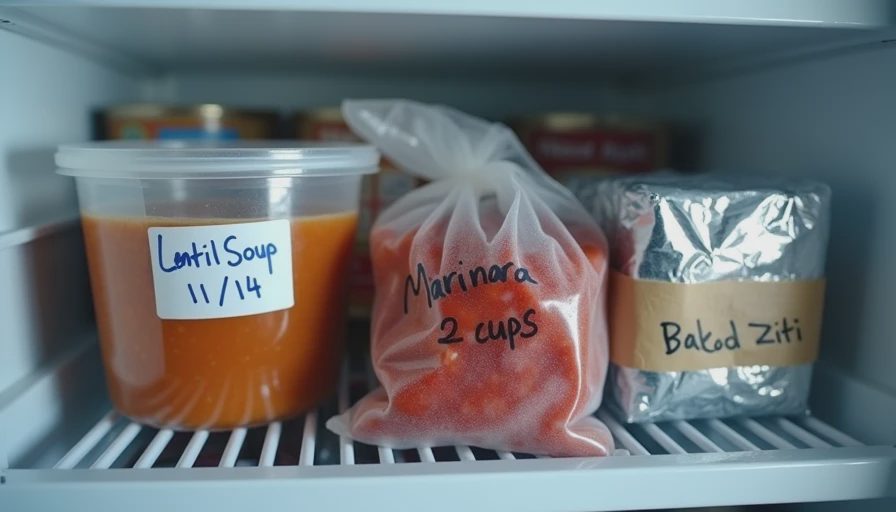
Label with three things: what it is, when you froze it, and how to reheat it. Write directly on the container or use freezer tape. "Chicken soup, frozen 11/14, heat on stove 10 min." That's all you need.
What I Keep in My Freezer Right Now
Right now, in my freezer, there's:
A batch of lentil soup, frozen in individual portions. I can heat one bowl in five minutes and eat it with one hand while holding the baby.
Two bags of frozen marinara sauce, each enough for one pasta dinner. I just boil pasta and heat the sauce.
A pan of baked ziti, divided into two smaller foil pans. One for this week, one for a night when I can't even think about cooking.
A dozen breakfast burritos, wrapped individually in foil. My husband and I grab these on mornings when no one has slept.
A bag of raw chicken thighs in a lemon-herb marinade, frozen flat. I'll thaw it overnight and roast it with vegetables for a meal that feels almost like I planned ahead.
That's it. Not twenty meals. Just a small stash of things I know we'll eat, built up over time.
The Reheating Secrets No One Tells You
Freezer meals only work if reheating them is easy and the food actually tastes good. Here's what I've learned.
Thaw in the Fridge Overnight
The best way to reheat most freezer meals is to thaw them in the fridge overnight. Move a portion from the freezer to the fridge before bed, and by tomorrow it'll be ready to reheat quickly. If you forget, you can thaw in the microwave or in a bowl of cold water, but the texture is usually better with a slow thaw.
Reheat Gently
High heat is the enemy of frozen food. It makes soups scorch, casseroles dry out, and sauces separate. Reheat on the stove over medium-low heat, or in the microwave at 50% power. Stir frequently. It takes a little longer, but the food tastes much better.
Add a Fresh Finish
The secret to making a freezer meal taste like real food is to add something fresh at the end. A squeeze of lemon, a handful of herbs, a sprinkle of cheese, a dollop of sour cream. This small addition wakes up flavors that have been dulled by freezing. It takes thirty seconds and makes a real difference.
What to Avoid
Don't Freeze Foods That Turn to Mush
Cream-based sauces, cooked pasta, cooked potatoes, and delicate vegetables like zucchini or spinach often break down when frozen and reheated. They become watery, grainy, or mushy. If you want to freeze a creamy soup, freeze the base without the cream and add it when you reheat. If you want to freeze pasta, freeze the sauce separately and cook the pasta fresh.
Don't Overpack Your Freezer
A freezer packed to the brim is hard to navigate and circulates air poorly, which can lead to inconsistent freezing. Leave some space. And when you add new meals, rotate older ones to the front so they don't get forgotten.
Don't Feel Guilty About Store-Bought Shortcuts
Some of the best freezer meals I've made involved ingredients from the frozen aisle — pre-chopped vegetables, frozen ravioli, rotisserie chicken. There is no award for making everything from scratch, and a tired parent doesn't need to prove anything. The goal is food that feeds your family, not a cooking competition.
A Real Night From My Own Life
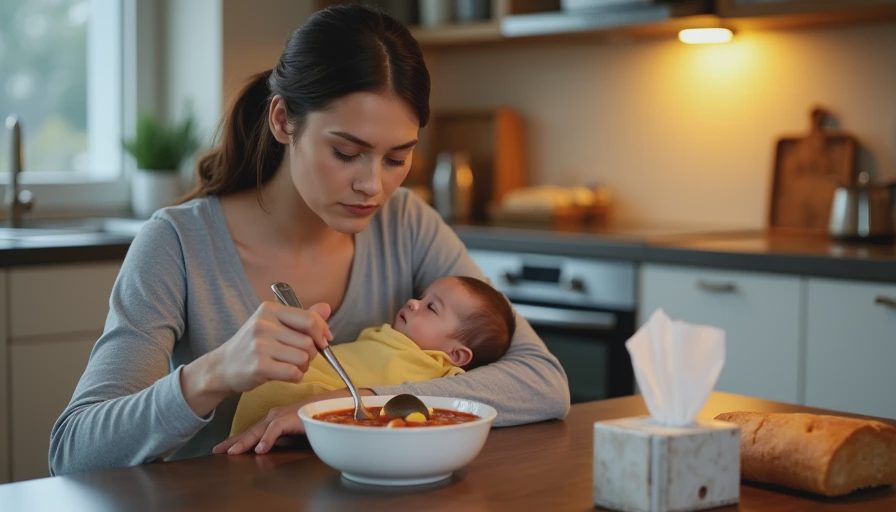
Last Tuesday, my son was going through a sleep regression, my daughter had refused her nap, and by 5:30 p.m. I was done. I had nothing planned for dinner, and the thought of cooking made me want to cry. Then I remembered the lentil soup in the freezer.
I pulled out a portion, thawed it in the microwave, and heated it on the stove while my daughter sat on the kitchen floor stacking measuring cups. I added a squeeze of lemon and some grated cheese on top. It was hot, it was good, and it took ten minutes. That meal felt like a small miracle, and it didn't require a single ounce of extra energy I didn't have.
That's the point of freezer meals. Not to impress anyone, not to fill a Pinterest board, but to feed yourself and your family on the days when cooking feels impossible. You don't need a perfect system. You need a few meals in the freezer that you actually want to eat, and a simple way to get them from freezer to table without losing your mind.
Start small. Cook once, freeze half. Label it. And when you're too tired to cook, let the freezer do the work.

No notes yet — write the first one.