The baby gear industry is a machine that runs on two fuels: hope and fear. Hope that this one product will make your baby sleep longer, cry less, or hit a milestone sooner. Fear that if you don't buy it, you're depriving your child of something essential. I've watched this machine work on hundreds of parents during my years as a postpartum care specialist, and I've also been caught in it myself — twice.
When I was pregnant with my first child, I spent an entire weekend building a baby registry with over 200 items. I had researched strollers like I was buying a car, compared crib mattresses like a forensic scientist, and added at least six different types of swaddles because I couldn't decide which one was "best." Looking back, I can tell you exactly how many of those 200 items I actually used regularly in the first year: maybe thirty. The rest collected dust, got sold on Facebook Marketplace, or became very expensive cat beds.
Here's what I'd skip if I had to start over, and what I'd use instead. This is not a list of "must-haves" — it's a list of honest reflections from someone who has both used this gear professionally and bought it personally.
The Gear That Eats Your Money
The Wi-Fi-Connected Bassinet That Costs as Much as a Used Car
I'm not going to name specific brands, but you know the ones I'm talking about. Bassinets with built-in microphones, motion sensors, white noise machines, and apps that track your baby's "sleep quality" on a graph. Some of them cost more than a month of rent in Kansas City.
Here's the truth: your baby does not need a smart bassinet. Your baby needs a safe, flat sleep surface with a firm mattress and a fitted sheet. A basic bassinet that meets current safety standards will cost you somewhere between $80 and $200, and it will do exactly what the $1,200 one does — hold your sleeping baby. The graphs are for you, not for them. And if you're exhausted at 3 a.m., the last thing you need is an app telling you your baby's sleep was "poor quality." You already know that. You were there.
One family I worked with had a bassinet that tracked "sleep efficiency" and generated daily reports. The mother showed me her phone one morning with tears in her eyes: the app said her five-week-old's sleep was "below optimal" and suggested adjusting the room temperature. She had already adjusted the room temperature. The app didn't know her baby was in a growth spurt. The app didn't know her baby was cluster feeding. The app made her feel like a failure because an algorithm had no context. That bassinet went to a consignment shop before the baby was three months old.
What to buy instead: A simple bassinet or co-sleeper that meets current safety standards. Put the extra money in a savings account for diapers. You will need it.
The Changing Table That Becomes a Laundry Tower
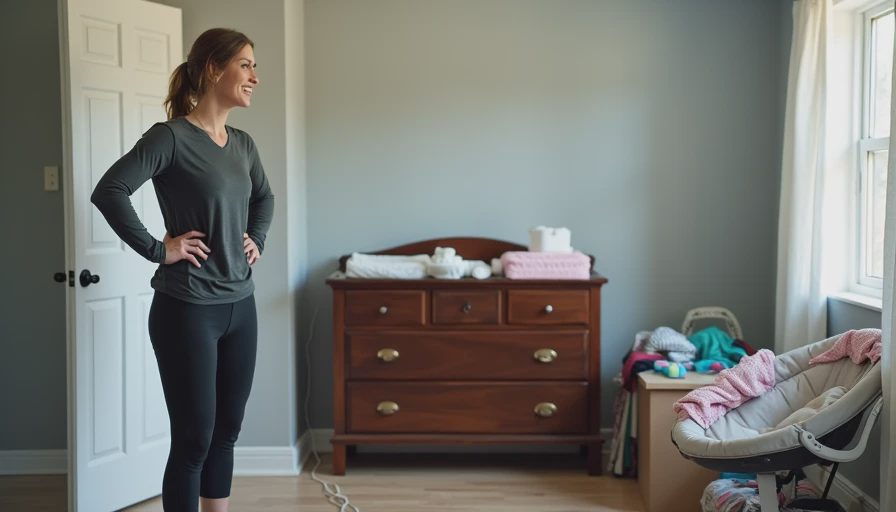
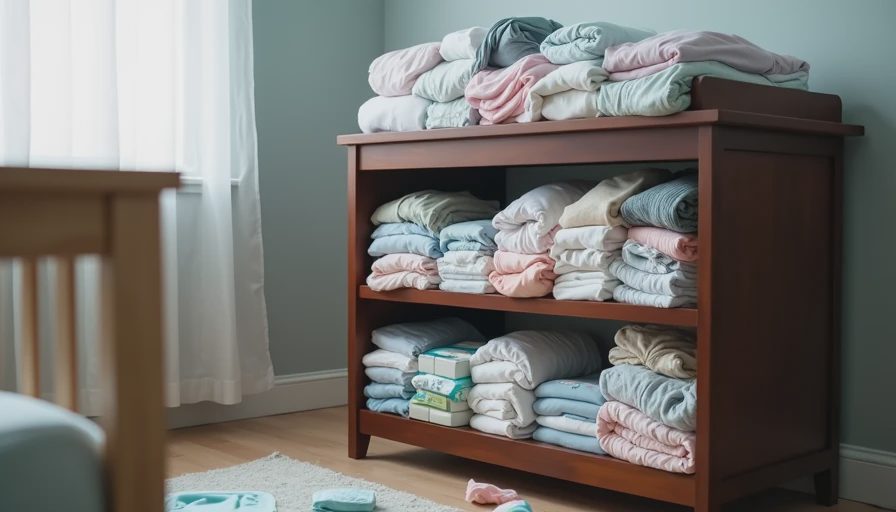
I see this in almost every nursery: a beautiful wooden changing table with three shelves, matching storage baskets, and a wipe warmer. It looks perfect in the photos. Then the baby arrives, and within two weeks, the changing table is buried under a pile of clean-but-unfolded laundry, and every diaper change happens on the floor, the couch, or the bed.
A dedicated changing table is one of the most common pieces of baby gear to skip, especially if you live in a two-story house or an apartment without a dedicated nursery. You will not walk back to the nursery every time your baby needs a diaper change. You will change them wherever you are, which is usually the living room or your bedroom.
What to buy instead: A simple changing pad or a waterproof mat that you can move from room to room. Set up a diaper caddy — a basket with diapers, wipes, cream, and a spare onesie — in every room where you spend significant time. I wrote a whole post about setting up a diaper station that actually saves you steps, but the short version is this: changing happens everywhere, so your supplies should too.
The Bottle Warmer That Takes Longer Than the Baby's Patience
If you're formula feeding or pumping, you'll be told you need a bottle warmer. You don't. A bottle warmer takes several minutes to heat a bottle while your baby screams with increasing urgency. Then you have to test the temperature, realize it's too hot, and wait another minute for it to cool down. Meanwhile, the baby has escalated from "hungry" to "personally offended by the concept of delayed gratification."
The simplest way to warm a bottle is to run it under warm tap water for a minute or two, or place it in a bowl of warm water. It's faster, it's free, and it doesn't take up counter space. Some babies will also drink cold or room-temperature formula without any issues — if your baby accepts it, don't create a warming habit you'll have to maintain.
What to buy instead: A stack of quick-dry microfiber kitchen cloths for warming bottles under the tap, and a travel formula dispenser if you're formula feeding on the go.
The Wipe Warmer (Yes, I'm Going There)
Wipe warmers are a product that sounds thoughtful — "I don't want to put a cold wipe on my baby's bottom!" — but they cause more problems than they solve. The warmers dry out wipes, they require cleaning to prevent bacteria growth, and once your baby gets used to warm wipes, every diaper change outside the house becomes a cold wipe betrayal.
I've also seen wipe warmers fail. The heating element stops working, the wipes get cold again anyway, or worse, the warm moisture becomes a breeding ground for mold if you don't clean it regularly. Your baby does not care about the temperature of the wipe. They care that their bottom is clean and dry.
What to buy instead: Regular wipes. If you're worried about cold wipes in winter, warm a wipe between your hands for five seconds before using it. That's all the warmth your baby needs.
The Gear That Eats Your Space
The Full-Sized High Chair for a Newborn
You will not need a high chair in the first six months. Your newborn cannot sit up, cannot eat solids, and has absolutely no use for a high chair. Yet many registries include one because it's a "big ticket item" that grandparents like to buy.
A full-sized high chair takes up a significant footprint in your kitchen, and it will sit empty for months. When you finally need one — usually around five or six months when solids begin — you'll have a better sense of what features matter to you. Maybe you'll want one that clips onto the table, or one that reclines for bottle feeding, or one that's easy to clean because your baby turns every meal into a Jackson Pollock painting.
What to buy instead: Wait. Don't buy a high chair until your baby is close to starting solids. When you do, consider a compact or clip-on style if your kitchen is small. And prioritize ease of cleaning over aesthetics — you will be scraping oatmeal out of crevices for at least a year.
The Full-Sized Stroller With the Bassinet Attachment, the Car Seat Adapter, and the Snack Tray
Full-sized travel systems are tempting because they promise to carry you from newborn to toddler in one purchase. The problem is that they're heavy, bulky, and often overkill for most daily life. If you live in the suburbs and drive everywhere, you'll spend more time wrestling this stroller in and out of your trunk than you'll spend pushing it.
Here's what actually happens with most giant travel systems: you use the infant car seat clipped into the stroller for the first three months, then the baby gets heavy and you start leaving the stroller at home because it's too much hassle. By six months, you've bought a lightweight umbrella stroller because it's easier to fold, and the travel system is collecting dust in the garage.
What to buy instead: A lightweight umbrella stroller with a recline feature, or a mid-range stroller that's easy to fold with one hand. If you walk a lot — like, daily neighborhood walks or city living — then invest in a quality stroller with good wheels and a comfortable handle height. If you drive everywhere, prioritize car seat compatibility over stroller bells and whistles.
The "Complete" Nursery Furniture Set
Every baby store sells matching nursery sets: crib, dresser, changing table, bookshelf, nightstand, glider. The full set costs thousands of dollars, and half of it isn't necessary. Your baby needs a safe place to sleep, a place to store clothes, and a comfortable chair for feeding. That's it. The matching bookshelf and the decorative side table are for the room, not the baby.
I made this mistake with my first child. I bought the whole matching set because the showroom looked so peaceful and organized. Within a year, the bookshelf was covered in board books and half-empty bottles of lotion, the "changing table" was a laundry pile as I mentioned, and the side table was buried under a box of wipes and a stack of burp cloths.
What to buy instead: A crib that converts to a toddler bed if you want longevity, a simple dresser with a changing pad on top (this saves you from buying both a dresser and a changing table), and a comfortable glider or rocking chair. You can add bookshelves and decorative furniture later if you want them — but you probably won't.
The Gear Worth the Money (The Short List)
I don't want this to sound like all baby gear is a waste. Some things genuinely earn their place, and I'd buy them again without hesitation.
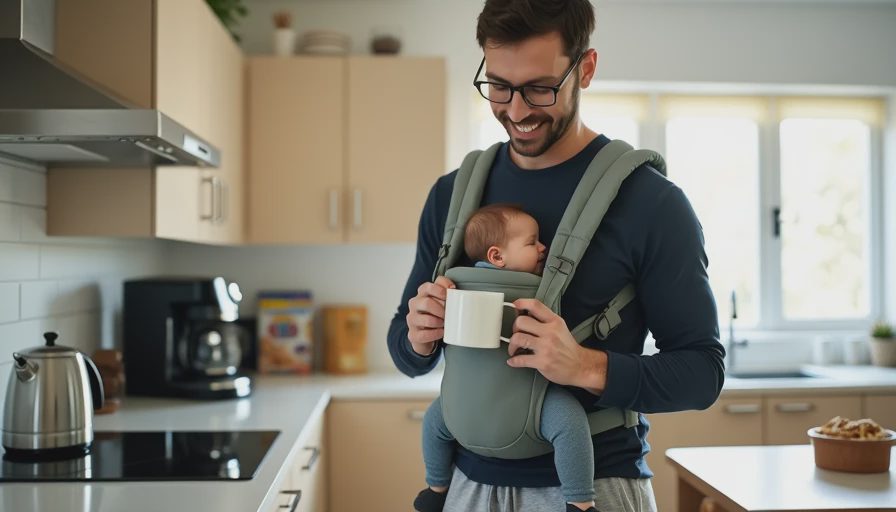
A good baby carrier. Not the cheapest one — the one that fits your body well. You'll wear it for hours, and a poorly designed carrier will hurt your back and frustrate your baby. Try on different styles if you can, or buy from a retailer with a good return policy.
A white noise machine. This doesn't need to be fancy. A basic white noise machine with continuous sound (not a timer) will help your baby sleep through household noise and give you a tiny bit more freedom to move around while they nap.
Blackout curtains. If your baby's room gets any direct sunlight, blackout curtains are worth every penny. They help create a dark, sleep-friendly environment that mimics the womb and encourages longer naps.
A comfortable nursing pillow. Whether you breastfeed or bottle feed, a supportive pillow saves your back, your arms, and your posture during the hundreds of feeding sessions in the first year. My neck still thanks me for buying a good one.
A quality car seat. Do not buy a used car seat unless you know its complete history and it hasn't been in an accident. This is the one place where "get the safest option you can afford" applies. The good news is that all car seats sold in the U.S. must meet the same federal safety standards, so the cheapest new seat is still safe.
More burp cloths than you think you need. Then buy twice that many. I'm not exaggerating. You will use them for feeding, spit-up, drool, emergency wipe-ups, and as a shield between your shoulder and a refluxy baby's mouth. Buy cheap ones. Buy a lot of them.
The Real Rule for Baby Gear
When I worked with new parents, I used to give them one simple guideline for deciding what to buy: Will this item make the next two weeks easier, or is it for the fantasy version of parenthood?
The fantasy version of parenthood has a beautifully decorated nursery, a peaceful feeding corner with a matching glider and ottoman, and a stroller that glides through the park while you drink a latte. The real version of parenthood has a changing pad on the living room floor, a basket of diapers next to the couch, and a carrier that smells like spit-up but works every time.
You do not need a perfect system. You need one that works at 3 a.m. And the honest truth about baby gear is this: your baby needs you more than anything you can buy. They need your warmth, your voice, your arms, your attention. A $300 bouncer is just a place to put them down for five minutes. A $20 secondhand swing does the same job.
So if you're building a registry and feeling overwhelmed by all the options, take a breath. Skip the smart bassinet. Skip the wipe warmer. Skip the matching nursery set. Buy the basics, keep the receipt, and remember that the baby gear industry wants you to believe you're one product away from easier parenting. You're not. You're already equipped with everything that matters most.
Start with the part that makes tonight easier. That part is usually not in the baby aisle.

No notes yet — write the first one.